

Apis mellifera carnica, Carniolan bee, Carnica Biene and Krainer Biene are all names for the same bee species, which is one of the most widespread in Europe. Slovenia and Carnica are connected by a long breeding tradition, and Slovenia is considered the original country of origin of Apis mellifera carnica – the Carniolan bee. This species of honey bee, described by Pollman in 1879, is native to Slovenia, southern Austria, and parts of Croatia, Bosnia and Herzegovina, Montenegro, Serbia, Hungary, Romania and Bulgaria.
The breeding of the Carniolan queens at Pislak Bali Beekeeping dates back to the 1970s, when the need to arose to provide quality queens for the growing beekeeping industry’s own needs and later for sale. Over the years, Pislak Bali’s Carnica bee lines established themselves as reliable, well-selected queens that achieve top production results. Basic selection is carried out from over 2,000 bee families, of which the best Carnica queens are selected for honey yield, calmness, purity of the breed, cleaning instinct, liveliness and non-swarming. The same attention is paid to the breeding of drones.


Carnica bees are very popular among beekeepers for several reasons:
With the proper selection of the Carniolan queen bee, we can achieve the highest level of progress in the production capabilities of our bees. And that is what we have been doing in our beekeeping for decades. We are especially proud of our success in reducing the swarming instinct while maintaining the vitality and strength of the bee family, which is what makes our selected lines of Carnica queens stand out.
The selection process or the choice of a selection line is a process that lasts for more than two years, during which time we observe the production characteristics of both the queen, who is a candidate for F0, and her F1 daughters.
*related to VSH (varroa sensitive hygiene)
**we focus on the largeness of the breaded queen bee, as it has been established that larger queen bees have 170 ovarian tubules in one ovary and produce on average 27.6 kg of honey, while smaller queen bees with 109 ovarian tubules in one ovary produce on average 19.2 kg of honey
We also devote a great deal of attention to creating drone lines, which we select from the queens whose colonies produce the most honey.


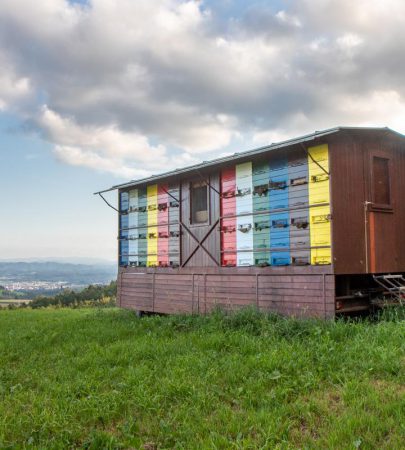
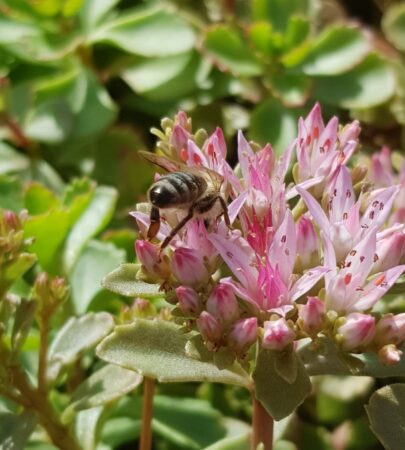


In the selection process, we measure the cubital index, perform PIN testing (testing of cleaning capabilities) and testing through their offspring.
Many years of rich experience in Carniolan queen breeding and cooperation with the Agricultural Institute of Slovenia are reflected in the quality and recognition of our Carniolan queen lines. Today, we are a reliable partner in the supply of top-quality breeding material, both for Europe, and the Middle East and Far East. We use several types of mating hives. The most important is Pislak’s mating hive, designed by our founder Janko Pislak specifically for Apis mellifera carnica.

Foto by: Vejica Rado Škrjanec and Beekeeping Pislak Bali